
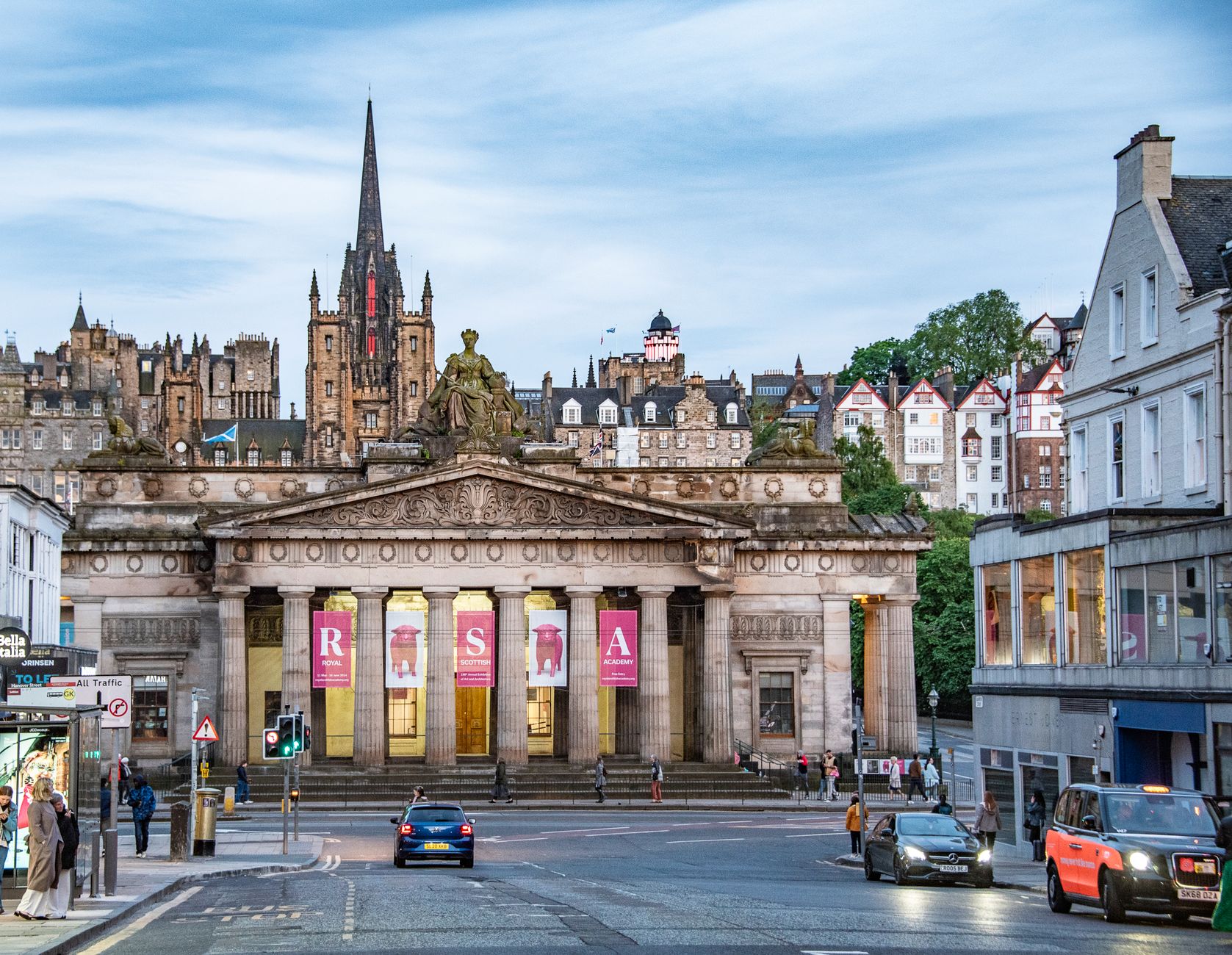
Edinburgh’s museums form one of the most impressive concentrations of world-class cultural attractions in the United Kingdom, with many offering free entry. Whether you’re interested in Scottish history, fine art, natural history, or quirky interactive experiences, the city has something to offer every visitor. This guide covers the major institutions and lesser-known museums worth your time, helping you navigate what to see based on your interests and available time.
The vast majority of Edinburgh’s best museums charge no admission, making it possible to explore the city’s cultural heritage without stretching your budget. Entry fees apply only to a few paid attractions and special exhibitions, while the “big four” national institutions – the National Museum of Scotland, the National (formerly Scottish National Gallery), the Scottish National Portrait Gallery, and the Modern Art Gallery – remain completely free for their permanent collections.
Most museums keep standard hours from 10am to 5pm daily, though some may have extended evening hours on certain days. It’s worth checking individual opening times before your visit, as special exhibitions or seasonal closures may apply. Many of the city’s museums cluster along the Royal Mile in the Old Town, making it easy to visit several in a single day.
The National Museum of Scotland: Scotland’s Story Under One Roof
The National Museum of Scotland occupies two adjoining buildings on Chambers Street in the Old Town, combining a striking Victorian structure with a contemporary sandstone extension. Entry to the permanent galleries is completely free, making it one of the city’s most accessible attractions. The museum opens daily from 10am to 5pm, though it closes at 5pm on December 25th with reduced hours on Boxing Day and New Year’s Day.
The museum’s collections span Scotland’s geological origins through to the present day, spread across multiple galleries and seven floors. Visitors can explore prehistoric Scotland on the ground floor, discover the Kingdom of Scotland (900–1707) across the first and second floors, and encounter the Industrial Revolution on the fourth and fifth floors. The sixth floor focuses on modern Scotland from World War I onwards, whilst the seventh-floor terrace offers panoramic views of Edinburgh itself.
Key highlights include Dolly the Sheep, the world’s first mammal cloned from an adult cell, displayed in the Science and Technology galleries, and the Millennium Clock – a 12-metre kinetic sculpture that performs on the hour with chiming bells. The Natural World galleries showcase hundreds of animal species, from dinosaurs to contemporary creatures, whilst the Grand Gallery itself is a Victorian masterpiece featuring soaring pillars and a magnificent glass ceiling.
The National: European and Scottish Masterpieces
Located on the Mound, the National (formerly known as the Scottish National Gallery, rebranded in 2023) houses an exceptional collection of European and Scottish art spanning from the 14th to 20th centuries. Admission to the permanent collection is free and has been since the gallery’s opening. The gallery opens daily from 10am to 5pm, with extended hours until 7pm on Thursdays. Temporary exhibitions may require paid tickets, which can be booked in advance.
The gallery’s permanent collection features works by international masters including Titian’s Diana and Actaeon, paintings by Rembrandt, Vermeer, Velázquez, and Impressionist works by Degas and Van Gogh. The newly opened Scottish galleries showcase the very best of Scottish art from 1800 to 1945, featuring artists such as William McTaggart, Anne Redpath, Phoebe Anna Traquair, and Charles Rennie Mackintosh. One of the most celebrated paintings in the collection is Henry Raeburn’s “The Skating Minister,” an iconic image of Scottish art.
The gallery complex includes three connected buildings with shops, cafés, and learning spaces. The neoclassical building itself is architecturally significant and worth admiring from the exterior if time is limited. Please note that the Gallery Bus shuttle service between the National and the Modern Art Gallery is not currently operating; however, the galleries are easily accessible via public transport or on foot.
Museums Along the Royal Mile: History, Childhood, and Stories
The Royal Mile – Edinburgh’s most famous street – hosts several excellent museums within walking distance, making it ideal for spending a day exploring the city’s heritage. These museums are generally free or low-cost, allowing visitors to move between them easily.
Museum of Edinburgh (Huntly House)
The Museum of Edinburgh is housed in the magnificent 16th-century Huntly House, also known as “The Speaking House” due to Latin inscriptions on its façade. Admission is completely free. The museum opens seven days a week from 10am to 5pm, with last entry at 4:30pm.
The museum tells Edinburgh’s story from its origins to the present day through objects including silver, ceramic, and glass pieces. Notable exhibits include original drawings of Edinburgh’s New Town and a 16th-century miniature of the Old Town dating from the time of Mary, Queen of Scots. A small exhibition honours Greyfriars Bobby, the dog who famously watched over his owner’s grave for fourteen years. The maze-like interior of Huntly House itself offers an authentic experience of historic Edinburgh living.
Museum of Childhood
The Museum of Childhood specialises in toys, playthings, doll houses, and games from various periods, making it a popular stop for families and anyone interested in the history of childhood. The collection spans vintage toys to contemporary artefacts, all displayed in a historic building on the Royal Mile. Admission is free, and the museum opens during standard hours.
People’s Story Museum
Located in the historic Canongate Tolbooth building, the People’s Story Museum explores the daily lives of Edinburgh’s citizens from the 18th century to the present day. Rather than focusing on grand narratives, the exhibits are formed from oral and written history from ordinary people themselves, offering a unique perspective on how Edinburgh’s working classes lived and worked through significant historical periods. Entry is free.
The Underground and the Dark Past: The Real Mary King’s Close
The Real Mary King’s Close offers a fundamentally different museum experience. This historic close (alleyway) lies beneath the streets of the Royal Mile, preserved as a frozen snapshot of 17th-century Edinburgh life. The close was partially demolished and sealed underground in 1753 when the Royal Exchange (now Edinburgh City Chambers) was constructed, and remained inaccessible to the public until 2003.
A guided tour takes visitors down below street level into preserved streets, homes, and passageways, where they learn the stories of people who lived, worked, and died in these cramped conditions. The close became notorious for myths and hauntings, linked to plague outbreaks and hardship during the 17th century. Tours are led by guides in period costume, and the experience is notably atmospheric. The close is located on the Royal Mile just opposite St Giles’ Cathedral, with timed entry recommended during peak season.
Unlike the other museums mentioned, this attraction charges admission. It’s a paid experience but offers something genuinely unique among Edinburgh’s cultural offerings – a chance to explore an actual preserved street from Edinburgh’s past underground.
Museum on the Mound and Banking History
Housed in the historic head office of the Bank of Scotland, the Museum on the Mound explores the history of money, economics, and Scotland’s banking heritage. Admission is completely free. The museum occupies a striking building and offers an unusual perspective on Scottish economic development and financial innovation. It’s an underrated stop for those interested in how wealth, trade, and banking shaped Edinburgh and Scotland.
Specialist Collections: War, Art, and Science
National War Museum at Edinburgh Castle
The National War Museum is housed within Edinburgh Castle and covers 400 years of Scotland at war from the 17th century onwards. Entry requires a paid ticket to Edinburgh Castle, but the museum itself is included with castle admission. The museum opened in 1933 in a converted 18th-century ordnance storehouse and features uniforms, insignia, medals, and weapons that tell the story of Scottish military history.
Edinburgh Castle is Scotland’s most visited paid-for attraction, receiving nearly two million visitors annually. The castle also houses the Honours of Scotland (the country’s crown jewels), St Margaret’s Chapel (Edinburgh’s oldest building), and other historical spaces. Booking ahead is highly recommended, as the castle sells out during high season.
The Scottish National Portrait Gallery
The Scottish National Portrait Gallery features a collection of portraits exploring Scottish history and identity through the faces of famous and influential people from the nation’s past. The gallery is housed in a striking red-sandstone Gothic Revival building and offers free entry to permanent collections. It’s part of the National Galleries of Scotland network and is located near Princes Street.
Surgeons’ Hall Museums
For visitors interested in medical history and the human body, Surgeons’ Hall Museums on Nicolson Street offers a specialised collection. Owned by the Royal College of Surgeons of Edinburgh, the museums comprise The Wohl Pathology Museum, The History of Surgery Museum, The Dental Collection, and Body Voyager. The museums reopened in 2015 after extensive refurbishment, making the collections more engaging and accessible than in previous years.
Interactive and Entertainment Museums
Camera Obscura and World of Illusions
Located on Castlehill near Edinburgh Castle, Camera Obscura and World of Illusions occupies five floors of an historic building that was once the city’s observatory. The attraction features interactive illusions, holograms, 3D experiences, and hands-on exhibits. On the top floor, the Victorian Camera Obscura allows visitors to explore the city from a completely unique vantage point, projecting real-time views of Edinburgh onto a viewing table.
This is a paid attraction with timed entry slots. It’s excellent for families and mixed-age groups, and provides a good option during poor weather. Booking in advance is recommended to secure entry, especially during peak season and festivals.
The Museum of Magic, Fortune-telling and Witchcraft
Edinburgh’s darker history is explored at this specialised museum dedicated to magic and witchcraft. The museum covers the fascinating (and often disturbing) history of superstition, folklore, and persecution in Edinburgh and Scotland, with exhibits related to historical witchcraft trials and belief systems. This is a paid attraction offering a unique perspective on the city’s darker heritage.
Planning Your Museum Visits
Admission and Hours
Most major free museums in Edinburgh keep standard hours: 10am to 5pm daily. Paid attractions such as Edinburgh Castle, Camera Obscura, and Mary King’s Close operate extended hours during peak season and festivals. Many museums close on December 25th, with reduced hours on Boxing Day and New Year’s Day. Some museums stay open slightly later during Edinburgh’s August festivals.
Clustering Your Visits
The Old Town’s Royal Mile is home to the highest concentration of museums within walking distance: the National Museum, Museum of Edinburgh, Museum of Childhood, People’s Story Museum, Writers’ Museum, and Camera Obscura are all accessible on foot. Plan to spend a full day exploring this area if you want to visit multiple institutions.
For art lovers, the Mound area (home to the National and Modern Art Gallery) is separate but easily reached by walking through Princes Street Gardens or using public transport.
Accessibility
Most major museums in Edinburgh are fully accessible, with lifts, ramps, and accessible facilities available. The National Museum, National, and Castle all provide accessibility information on their websites. Wheelchair access, hearing loops, and assistance dogs are welcome at major institutions.
Visiting with Children
The National Museum of Scotland is highly regarded for families, with an interactive under-five gallery, a T-Rex skeleton, and Dolly the Sheep as major draws. The Museum of Childhood is self-explanatory for younger visitors, whilst Camera Obscura offers hands-on fun for all ages. The Museum of Edinburgh’s Greyfriars Bobby display consistently appeals to children.
Frequently Asked Questions
Which museums in Edinburgh are completely free?
The National Museum of Scotland, National, Scottish National Portrait Gallery, Modern Art Gallery, Museum of Edinburgh, Museum of Childhood, People’s Story Museum, Writers’ Museum, and Museum on the Mound all offer free admission to permanent galleries. Some may charge for special exhibitions. Edinburgh Castle and paid attractions like Camera Obscura and Mary King’s Close require tickets.
How much time should I allow for each museum?
Plan 2–3 hours for the National Museum of Scotland if you want a focused visit; art galleries typically require 1–2 hours for the permanent collection. Smaller museums like Museum of Edinburgh or Museum of Childhood can be explored in 30–60 minutes. Camera Obscura typically takes 1–2 hours, whilst Mary King’s Close tours last about 45 minutes.
Can I visit multiple museums in one day?
Yes. Museums along the Royal Mile are within easy walking distance of each other, making it practical to visit 3–4 smaller museums in a single day. If you’re also visiting the National Museum or the galleries at the Mound, budget a full day for a more relaxed experience.
Are Edinburgh museums suitable for children?
Edinburgh has many family-friendly museums. The National Museum of Scotland is particularly popular for children thanks to interactive exhibits and the Dolly the Sheep display. Camera Obscura offers hands-on illusions for all ages, whilst the Museum of Childhood is specifically designed around children’s interests.
Do I need to book tickets in advance?
For free museums, advance booking isn’t necessary, though popular free institutions can get busy during festivals and peak season. For paid attractions like Edinburgh Castle, Camera Obscura, and Mary King’s Close, booking ahead is strongly recommended, especially during summer months and the Edinburgh Festival Fringe in August.
Which museum should I visit if I only have a few hours?
The National offers exceptional world-class art in a central location and can be explored in 1–2 hours. Alternatively, the Museum of Edinburgh provides a compact but engaging introduction to the city’s history in 45–60 minutes.
Discovering Edinburgh’s Cultural Treasures
Edinburgh’s museums reflect centuries of Scottish history, achievement, and culture, from medieval times through the Industrial Revolution to the present day. With free or low-cost admission to most major institutions and a remarkable variety of collections, the city offers a museum experience that rivals cities far larger than itself. Whether you’re drawn to fine art, natural history, social history, or the city’s darker folklore and hauntings, spending time exploring Edinburgh’s museums is one of the best ways to understand how this historic capital has developed and what makes it distinctive today. Plan your visits around your interests, allow time to wander the Old Town’s closes and streets between museum visits, and take advantage of the many free institutions to make your Edinburgh museum experience both memorable and affordable.