
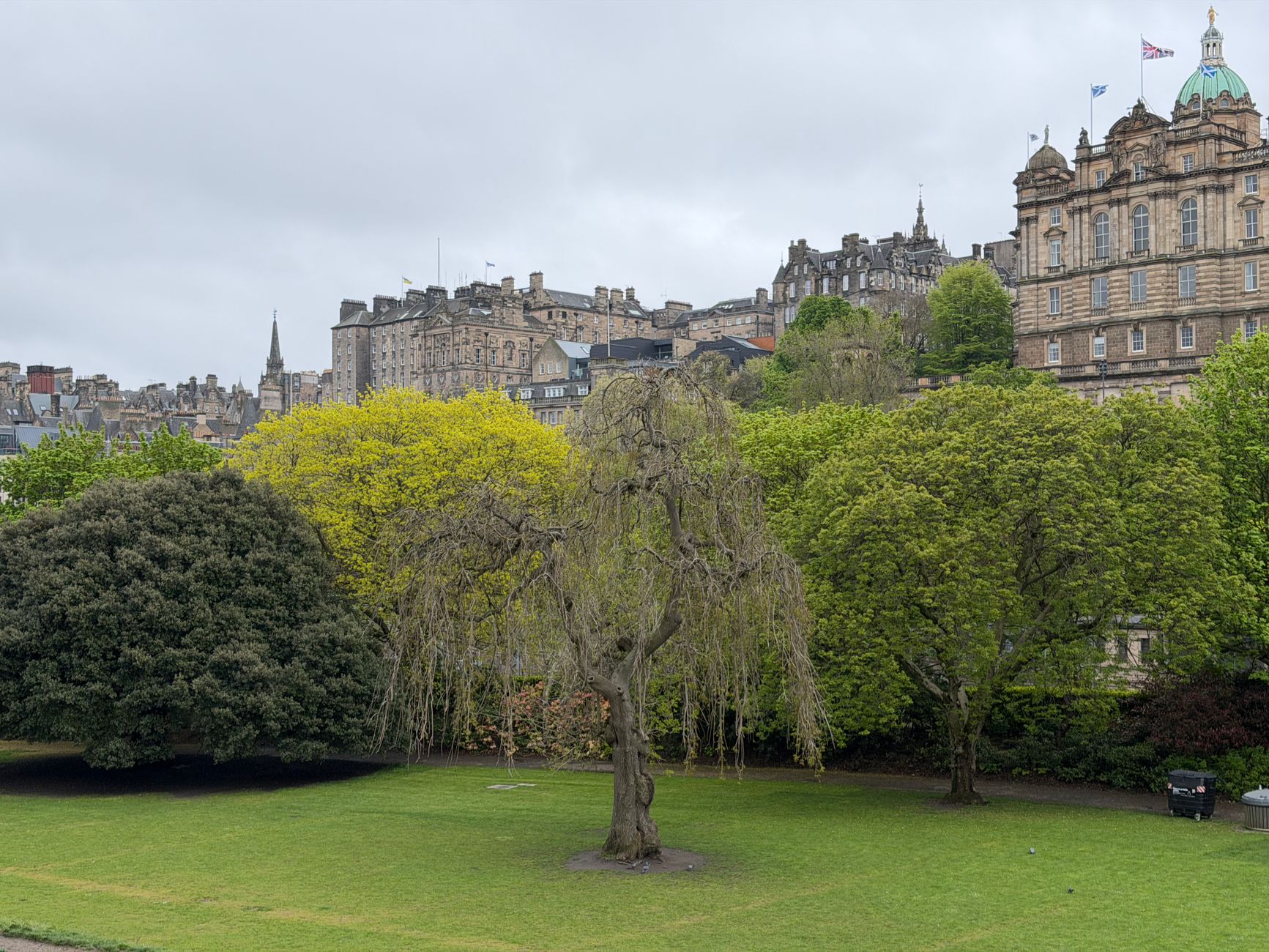
Edinburgh is one of the greenest cities in the UK, with more than 30 parks and gardens woven through its historic neighbourhoods. Whether you’re seeking a peaceful botanical retreat, iconic Victorian parkland, or riverside walks, Edinburgh’s gardens offer something for every visitor. This guide covers the best gardens worth visiting, where to find them, and practical information for planning your visit.
The city’s green spaces range from internationally significant botanical collections to intimate neighbourhood gardens tucked away from the main tourist routes. Many are completely free to access, making them perfect for visitors on any budget. Together, they form what locals and visitors describe as Edinburgh’s “green lungs” – essential spaces that balance the city’s historic architecture and urban energy.
From the sprawling grounds of the Royal Botanic Garden to the dramatic landscaping of Princes Street Gardens overlooking Edinburgh Castle, each garden has its own character and purpose. Some are destinations in themselves; others work best as stops during a broader Edinburgh itinerary.
Royal Botanic Garden Edinburgh
The Royal Botanic Garden Edinburgh (known locally as “The Botanics”) is one of the world’s leading botanical institutions. It is a serious plant research and conservation centre, not merely a recreational garden, though it serves both purposes beautifully. The garden spans over 70 acres just one mile north of Edinburgh’s city centre and contains one of the richest plant collections on Earth.
Founded in 1670 as a Physic Garden by two doctors studying medicinal plants, the garden moved to its current Inverleith location in 1820 to escape city pollution. Today it operates as a global centre for biodiversity science and horticulture, working across four sites in Scotland.
What to see and experience
The garden is divided into distinct landscaped areas, each offering different experiences and plant collections. Major sections include:
- The Rock Garden with alpine plants in natural tufa stone formations
- The Woodland Garden offering shade-loving plants and peaceful walks
- The Chinese Hillside featuring plants from China and the Himalayas
- The Rhododendron Collection with vibrant blooms particularly in spring
- The Scottish Native Plants Collection in the Heath Garden
- The Arboretum showcasing specimen trees from around the world
- The Pond providing habitat and reflecting seasonal changes
A typical visit takes about 90 minutes, though many visitors spend several hours exploring. The garden is free to wander at your own pace during opening hours. Most of the glasshouses remain closed as part of the Edinburgh Biomes restoration project, though the historic Palm Houses are scheduled to reopen to the public on Friday 2 October 2026 following five years of restoration work.
Visitor facilities and access
The garden has two main entrances: the East Gate on Inverleith Row and the West Gate on Arboretum Place. The West Gate leads to the John Hope Gateway visitor centre, where you’ll find the café, restaurant, gift shop, and information desk.
Opening times vary seasonally. The garden opens daily at 10am, closing at 5pm (February to October) and 4pm (November to January). The garden is closed on 1 January and 25 December.
Public transport options include bus routes 8, 9, 23 and 27 to the East Gate, and routes 29 and 24 to the West Gate. There is metered on-street parking near the West Gate on Arboretum Place, plus Blue Badge accessible spaces. Bicycle stands are available at both entrances.
Accessibility features include level paths avoiding most steep gradients, and visitors can borrow mobility scooters or wheelchairs at no extra charge (though availability is limited). Assistance dogs are welcome; other dogs are not permitted.
Princes Street Gardens
Princes Street Gardens is probably the most visited garden in Scotland and certainly Edinburgh’s most iconic. Sitting in the shadow of Edinburgh Castle, this major urban park separates the Old Town from the New Town and has been a centrepiece of the city since the 1820s. The gardens occupy just under 40 acres and are divided into two sections – East and West – by an artificial hill called The Mound.
The site has a remarkable history. What is now a beautiful public park was created by draining Edinburgh’s largest loch, the Nor Loch, which had served as a Medieval defensive barrier and later became a dumping ground. The transformation created one of the UK’s most scenic urban spaces.
Two distinct sections with different characters
East Princes Street Gardens lies close to Edinburgh Waverley train station and tends to be busier. This section features the towering Scott Monument, opened in 1846 to commemorate writer Sir Walter Scott, and the world-famous Floral Clock – the oldest of its kind, featuring thousands of plants and actually telling the time. Many visitors come specifically to climb the Scott Monument’s 287 steps for panoramic city views.
West Princes Street Gardens extends from The Mound to Lothian Road and contains the recently restored Ross Fountain, a Victorian cast-iron masterpiece in turquoise and gold, plus the Ross Bandstand. This section tends to be quieter and offers excellent castle views, particularly during spring when cherry blossom trees frame the fortress dramatically.
Visitor information
Admission is completely free. The gardens open daily from 7am, with closing times varying seasonally: around 10pm during summer months and as early as 6pm in winter. The gates close overnight for public safety. Access points include Waverley Bridge, The Mound, King Stables Road, and Market Street.
The gardens are easily reached on foot from Princes Street itself, which runs alongside and offers excellent shopping and dining nearby. Multiple bus routes serve stops along the gardens’ perimeter. In December, the East Gardens transform into a major Christmas Market. During major events like Hogmanay, some areas may be ticketed or closed.
Note that some slopes between upper and lower levels are steep, so wheelchair users should enter from King Stables Road where level access is available to West Princes Street Gardens.
The Water of Leith Walkway and Dean Village
Rather than a formal garden, the Water of Leith Walkway offers a different kind of green space experience – a 13-mile riverside path following a small river from Balerno through the city to Leith. The walkway is suitable for walking, cycling, and parts are wheelchair-accessible. It winds through several neighbourhoods and parks, passing historic mills, statues, wells, and glimpses of Edinburgh’s industrial heritage.
Dean Village focus
One of the most popular and picturesque sections of the walkway centres on Dean Village, a former water milling community just a few minutes’ walk west of the city centre. The village was known as “Water of Leith Village” until the 19th century and had eleven working mills at its peak. After falling into disrepair, it was beautifully restored in the 1970s, preserving 19th-century buildings whilst adding contemporary amenities.
Today Dean Village is a quiet residential neighbourhood offering cobbled lanes, historic stone buildings, and peaceful river views. The walk down the Water of Leith Walkway to Dean Village takes roughly 30 minutes and passes hidden gems including Circus Lane. The village itself can be explored comfortably in 1–2 hours on foot.
The walkway passes near the Royal Botanic Garden, Scottish National Gallery of Modern Art, Dean Gallery, and other attractions, making it an excellent way to connect multiple visits. Note that there are no public facilities at Dean Village itself.
Other notable Edinburgh gardens
Inverleith Park
Located directly next to the Royal Botanic Garden to its south, Inverleith Park is a large public green space created from farmland. It sits in the heart of Edinburgh just to the north of the New Town and Stockbridge, offering open lawns, sports facilities, and excellent views across the city.
The Meadows
Lying just south of the Old Town, The Meadows is one of Edinburgh’s best-loved large public parks. It’s particularly popular with students from the nearby university campus and offers open grassland, tree-lined paths, and a peaceful escape from the busy city centre.
Edinburgh New Town Gardens
The New Town Conservation Area contains approximately 30 private communal gardens and parks distributed throughout the New Town and West End neighbourhoods. These heritage gardens, recognised since 2001, include the Dean Gardens – a 9-acre semi-woodland garden on the steep banks of the Water of Leith with spring bulbs and historic tree plantings.
St Andrew Square and the Surgeons’ Hall Gardens
St Andrew Square, a neoclassical public space in the city centre, features organised outdoor events including summer film screenings. Nearby, the Surgeons’ Hall gardens (free to access, with an optional paid museum) sit alongside the striking neoclassical building designed by William Henry Playfair in the 1820s and offer quiet green space steps away from the busy city.
Saughton Park and Gardens
Located near Gorgie in the west of the city, Saughton Park includes a well-maintained walled garden with no admission fee. The gardens are described as a small but charming gem, popular with locals for its peaceful atmosphere and the variety of bees, butterflies, and insects that thrive there.
Holyrood Park and the Palace Gardens
Holyrood Park is Edinburgh’s largest green space, surrounding the slopes and crags of Arthur’s Seat (the city’s highest point). The park offers walking and cycling paths through parkland, plus archaeological sites including Iron Age forts and Bronze Age terraces. The connected Palace Gardens at the royal residence showcase medicinal and culinary plants within a restored physic garden, accessible when the Palace is open to the public.
Planning your garden visits
Best times to visit
Edinburgh’s gardens offer different appeals across seasons. Spring brings rhododendrons, cherry blossoms and fresh growth. Summer offers the longest opening hours and full plant displays. Autumn provides colour in foliage. Winter features the Christmas Market in Princes Street Gardens and the structural beauty of dormant gardens. The Royal Botanic Garden is particularly appealing year-round thanks to evergreen plantings and its four sites across Scotland.
Getting around
Most major gardens are well-connected by Lothian Buses. The Royal Botanic Garden is served by routes 8, 9, 23, 27 and 29. Princes Street Gardens are accessible directly from Princes Street or multiple entry points throughout the city centre. The Water of Leith Walkway is accessible from many points and is suitable for cycling. Walking between gardens is often practical – Dean Village is a short walk from the city centre, and Inverleith Park adjoins the Royal Botanic Garden.
What to bring
Even on sunny days in Scotland, bring waterproof layers or an umbrella. Comfortable walking shoes are essential, particularly for the hillier gardens or longer walkway sections. Many gardens have cafés or nearby shops, though the Water of Leith Walkway itself has limited facilities.
| Garden | Best for | Location | Admission | Time needed |
|---|---|---|---|---|
| Royal Botanic Garden Edinburgh | Plant collections, botany, peaceful walks | Inverleith (north of city centre) | Free (glasshouses mostly closed until October 2026) | 90 minutes–several hours |
| Princes Street Gardens | Iconic views, monuments, city centre location | Between Old and New Towns | Free | 1–2 hours |
| Water of Leith Walkway & Dean Village | Riverside walks, photography, peaceful escape | Northwest of city centre | Free | 1–3 hours depending on route |
| Inverleith Park | Open green space, city views | North of city centre | Free | 1–2 hours |
| The Meadows | Casual walks, local atmosphere | South of Old Town | Free | 1 hour+ |
| Holyrood Park | Arthur’s Seat climb, archaeological sites | East of city centre | Free | 1–3 hours depending on route |
Accessibility and practical considerations
Most Edinburgh gardens are accessible, though the city’s terrain is hilly. The Royal Botanic Garden offers wheelchair and mobility scooter borrowing and has mostly level paths. Princes Street Gardens has level access from King Stables Road to the West section, but other areas include slopes. The Water of Leith Walkway is partially wheelchair-accessible.
Public facilities vary. The Royal Botanic Garden has full amenities including toilets, cafés and restaurants. Princes Street Gardens has scattered public toilets, some requiring payment or a RADAR key. The Water of Leith Walkway itself has limited facilities, though the Water of Leith Visitor Centre near the walkway offers refreshment stops.
Dogs are welcome in most gardens if kept on a lead, though they are not permitted in the Royal Botanic Garden (except assistance dogs).
Frequently asked questions about Edinburgh gardens
Are Edinburgh’s gardens free to visit?
Most are. Princes Street Gardens, The Meadows, Inverleith Park, the Water of Leith Walkway and other public parks are completely free. The Royal Botanic Garden’s outdoor areas are free to explore; admission fees will apply to the restored glasshouses when they reopen.
What is the best time of year to visit?
Spring (April–May) is excellent for rhododendrons and cherry blossoms, particularly at the Royal Botanic Garden and in Princes Street Gardens. Summer offers the longest opening hours and full plant displays. Winter brings the Christmas Market to Princes Street Gardens and atmospheric frost on evergreen plantings.
How do I reach the Royal Botanic Garden from Edinburgh city centre?
Bus routes 8, 9, 23 and 27 serve the East Gate on Inverleith Row (about 20 minutes from the city centre). Routes 29 and 24 serve the West Gate on Arboretum Place. Alternatively, it’s about a 20–30 minute walk from the city centre, or a 5-minute walk from Stockbridge neighbourhood.
Can I combine visits to multiple gardens in one day?
Yes. A reasonable itinerary might include Princes Street Gardens (1–2 hours), then a bus or walk to the Royal Botanic Garden (90 minutes to several hours), followed by a walk back towards the city centre via the Water of Leith Walkway or Dean Village. Alternatively, focus on one major garden and combine it with a shorter visit to a neighbourhood garden.
Are the gardens accessible for wheelchair users?
Most major gardens have accessible sections. The Royal Botanic Garden has level paths and accessible facilities. Princes Street Gardens has level access from King Stables Road to the West section. The Water of Leith Walkway is partly accessible. Contact individual gardens beforehand if you have specific accessibility questions.
What should I know about visiting in winter?
Many gardens remain open, though some sections may be less lush. Opening hours are shorter. Princes Street Gardens transforms into a major Christmas Market in December. Check specific opening hours before visiting, and bring waterproof clothing and warm layers. The Royal Botanic Garden may offer a winter light experience in the evenings with separate paid entry.
Discover Edinburgh’s gardens beyond the city centre
Edinburgh’s garden offerings extend well beyond these main attractions. The city contains approximately 32 parks and green spaces recognised across different neighbourhoods. Many smaller, quieter gardens remain less known to visitors, offering peaceful alternatives to busy tourist spots. The New Town’s private communal gardens, tucked away behind elegant terraces, are heritage-listed and visible from public vantage points even when not accessible. Specialty gardens like the Secret Herb Garden near the Pentland Hills offer botanical focus to visitors willing to venture slightly outside the immediate city centre.
Whether you spend an afternoon at the world-class Royal Botanic Garden, take a stroll through iconic Princes Street Gardens, or discover a quiet corner of the Water of Leith Walkway, Edinburgh’s gardens reward exploration. They provide essential green space, historical perspective, and moments of calm within one of Britain’s most architecturally significant cities.
For more garden information and seasonal events, visit the official Royal Botanic Garden Edinburgh website or contact the City of Edinburgh Council’s parks and greenspaces team. Most gardens publish seasonal opening hours and event information online.