
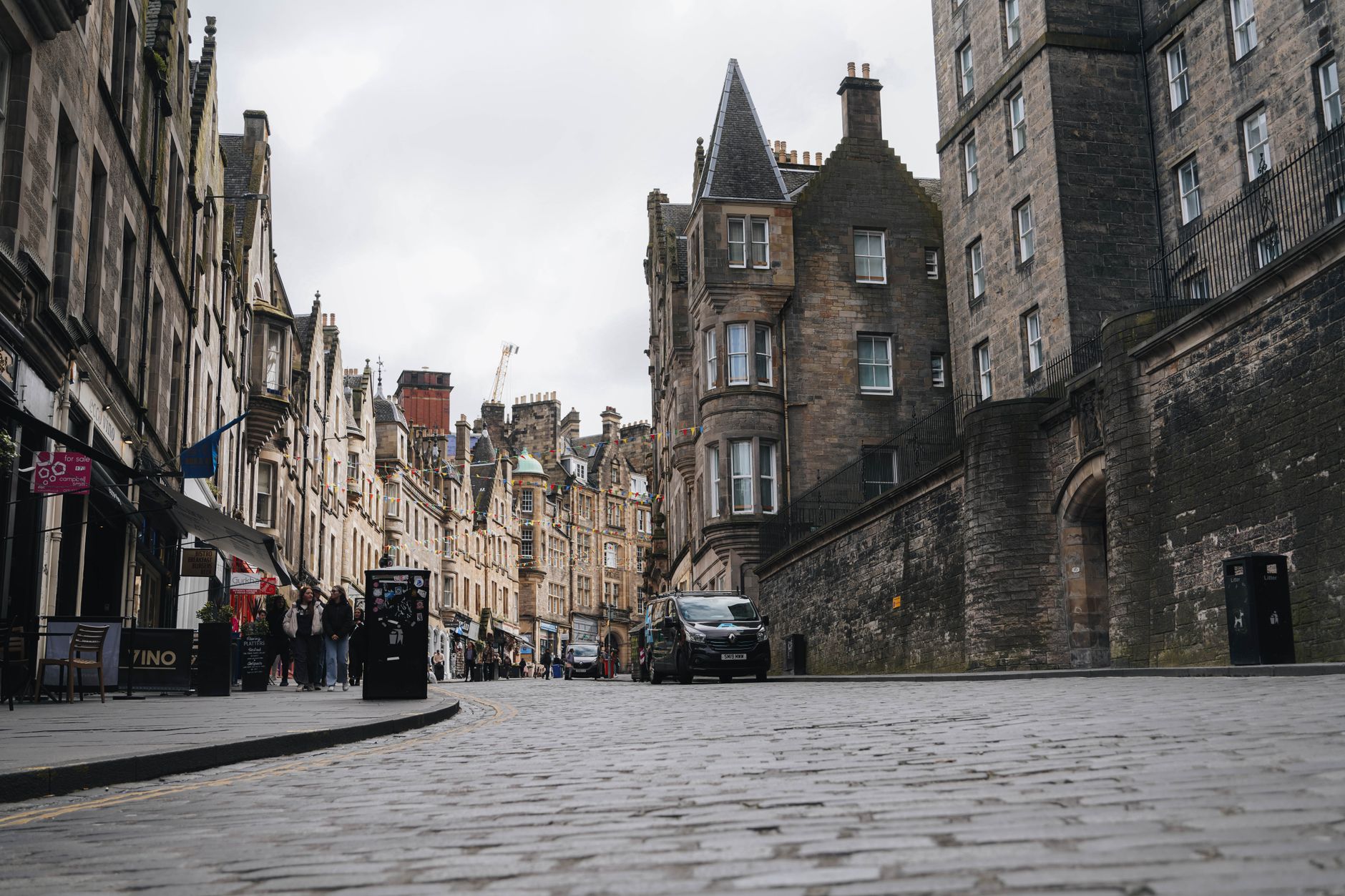
Edinburgh’s Old Town holds one of Europe’s most remarkable urban secrets: a network of narrow passages known as closes and wynds that branch from the Royal Mile like the bones of a fish. These steep, shadowed alleyways were once the primary routes of daily life for thousands of residents living in towering tenements, and today they remain one of the city’s most distinctive architectural features. For visitors wanting to experience authentic medieval Edinburgh beyond the main street, these passageways offer an essential – and often overlooked – window into how the city actually functioned.
Whether you’re wandering through atmospheric courtyards, discovering hidden gardens, or simply seeking respite from the crowds on the Royal Mile, understanding closes and wynds transforms your visit to Edinburgh. This guide explains what these passageways are, how they differ from one another, where to find them, and why they’ve shaped the city’s character for over 500 years.
The closes and wynds represent far more than tourist attractions: they embody the medieval solution to a city hemmed in by defensive walls and steep terrain, though many historic thoroughfares have since vanished from Edinburgh’s landscape. More than 70 named closes survive on and around the Royal Mile alone, many freely accessible and containing restaurants, museums, galleries, and quiet courtyards.
What Are Closes and Wynds? The Essential Difference
The terms “close” and “wynd” are often used interchangeably in Edinburgh, but they describe different things. Understanding the distinction helps explain how medieval Edinburgh was organised and how the city still functions today.
Closes: Private Dead Ends
A close is a narrow passageway that typically starts at the Royal Mile but leads nowhere else – it comes to a dead end within the interior of a building block. The word “close” derives from Scots and means “enclosed”. Historically, closes were private property with iron gates at the street entrance, locked at night to control access to the residences beyond. In this way, medieval closes functioned like gated communities, providing security and privacy for residents.
Today, most Edinburgh closes are no longer true dead ends, though some still have gates or come to an abrupt stop requiring a return to the Royal Mile. Many have been opened up or have alternative routes through them, making them more accessible to modern visitors. Closes typically slope steeply downhill from the Royal Mile, often with long flights of steps, creating dramatic changes in elevation.
Wynds: Open Thoroughfares
A wynd is fundamentally different: it’s an open, public passageway that connects from one street to another. The word “wynd” refers to the way these lanes wind through the buildings. Unlike closes, wynds were always public rights of way and were wide enough to accommodate a horse and cart. They provided essential links across the Old Town – for example, connecting the Royal Mile at the top of the ridge to the Cowgate running parallel below.
Wynds serve as shortcuts and thoroughfares for locals and visitors alike, making them busier than many closes. They remain some of the most functional passageways in Edinburgh’s medieval street plan.
Courts and Other Variations
Adding to the terminology, some closes open into wider courtyard areas called courts, which provided access to several buildings from a single passage. Sometimes the name “court” was given to specific buildings on a lane – such as Riddle’s Court – usually indicating properties owned or occupied by a notable family or figure. These variations reflect how Edinburgh’s medieval layout adapted to the terrain and the needs of different communities.
Why Closes and Wynds Exist: A Matter of Survival
Edinburgh’s unique street pattern wasn’t a choice – it was a necessity. During the early modern period, the city was surrounded by defensive walls that severely restricted outward expansion. Unable to build sideways, the city built upwards, stacking homes and workshops into tall tenement buildings that lined narrow alleyways.
The result was extraordinary urban density. At its peak, the Old Town contained tens of thousands of people within walls barely 140 acres in extent, making Edinburgh one of the most densely populated cities in the world. These conditions created serious problems: faecal waste ran down central gutters, food scraps piled in corners, and smoke drifted between windows. Yet the closes and wynds were vital arteries of daily life – routes to homes, shops, taverns, and markets that formed the functioning city.
Most of these narrow passages slope steeply down from the Royal Mile, creating a distinctive herring-bone pattern when viewed on a map, with many eventually leading toward Leith’s historic waterfront. Many have long flights of steps rather than gradual slopes, and they’re often surrounded by tall buildings on both sides, creating a canyon-like atmosphere. Medieval Edinburgh’s fortifications, built to defend against frequent attacks, reinforced this inward-looking, compressed urban design.
What Close Names Tell Us
Closes and wynds typically weren’t numbered on maps or in directories – they were named functionally. A close’s name revealed what visitors could expect to find inside:
- Occupant-based names: Named after a memorable resident, often someone of high status. Lady Stair’s Close, for example, was named after Elizabeth, Dowager Countess of Stair.
- Trade-based names: Bakehouse Close housed bakers, Fleshmarket Close was home to meat traders, and Advocate’s Close was where the Lord Advocate of Scotland resided.
- Descriptive names: Some names described the location or function – Warriston Close, Craig’s Close, or Dunbar’s Close – often linked to local landowners or families.
Over time, as businesses moved and residents changed, close names shifted accordingly. Barrie’s Close, for instance, has been known at different times as St Monan’s Wynd, Hangman’s Close, Steil’s Close, New Bank Close, and Back of Parliament Close. This fluidity made sense when most people had no need for permanent street addresses – they knew where their neighbours lived and which closes contained markets, taverns, or trades they used regularly.
The Evolution and Survival of Closes and Wynds
The story of Edinburgh’s closes and wynds is one of near-extinction and rediscovery. In the 19th century, the Victorian-era improvements to the Old Town demolished many historic passageways. New streets like Cockburn Street, constructed between 1856 and 1859 to provide a gentler gradient to Waverley Station, cut through or eliminated numerous closes. Of the estimated 250 closes and wynds that once existed along the length of the city, roughly 90 survive today, with many lost closes demolished or disappeared during the 19th century.
Those that remain have transformed significantly. Once dark, cramped, and often unsanitary, many are now improved pedestrian thoroughfares with better lighting and maintenance. Yet they retain their essential character: narrow, atmospheric passages where medieval Edinburgh still feels present.
Recent heritage initiatives have accelerated improvements. The Twelve Closes project, an urban renewal initiative launched in 2015, aimed to enhance 12 of the Old Town’s historic pedestrian streets, with community residents and local businesses at the heart of the improvements. Additional funding through Edinburgh’s visitor levy, which came into effect in July 2026, is supporting improvements to lighting and safety in the Twelve Closes project in the Old Town.
The Most Notable Closes to Explore
With over 70 named closes accessible from the Royal Mile and surrounding streets, visitors have genuine choice about where to wander. Here are some of the most rewarding:
Lady Stair’s Close
One of Edinburgh’s most beloved closes, Lady Stair’s Close opens off the Lawnmarket near Deacon Brodie’s Tavern. The close centres on Lady Stair’s House, a 17th-century townhouse built in 1622 for Sir William Gray of Pittendrum, with its steep gables and intricate stonework reflecting the period’s architecture. The initials of its first owners are still visible above the entrance.
Today, the house is home to the Writers’ Museum, a free museum dedicated to three literary giants with Edinburgh connections: Robert Burns, Sir Walter Scott, and Robert Louis Stevenson. The museum displays manuscripts, portraits, and personal artefacts. Outside, Makars’ Court features inscribed flagstones honouring other notable Scottish writers. The close itself is always accessible, offering a peaceful atmospheric spot for reflection or photography, especially in the softer light of morning or late afternoon.
Mary King’s Close
Mary King’s Close is both the most famous and most accessible for formal exploration. Once a busy street with shops and houses, it was named after Mary King, a business woman who occupied a property here during the 1600s. In 1753, a new building was constructed on top of the close and several adjacent ones, partially burying them beneath the street. Local legend claimed that during a plague outbreak in the mid-17th century, the close was used for quarantine, though historical evidence for this is contested.
The lower sections of the original buildings were excavated in the early 2000s and opened to the public in 2003 as The Real Mary King’s Close, a popular tourist attraction where guided historical tours explore the layered archaeology of the city and the lives of former residents.
Advocate’s Close
Dating back to the 15th century, Advocate’s Close is a steep and narrow lane connecting the Royal Mile to Cockburn Street. Named after Sir James Stewart, the Lord Advocate of Scotland from 1692 to 1709, the close contains remnants from the 16th century. The close remains an active passage with modern shops and cafes alongside historic architecture.
Fleshmarket Close
Fleshmarket Close was once home to a thriving meat market. An abattoir stood at the bottom while the market itself operated at the top, where the close met the bustling High Street. Butchers would hang meat along the passageway, making it a hub of commercial activity. Today the close retains its historic character while serving contemporary uses.
Cockburn Street and Adjacent Closes
Whilst not itself a close, Cockburn Street is a distinctive curved thoroughfare carved out in the Victorian era that cuts through multiple historic closes and alleyways. On the south side, leading up to the Royal Mile, both Warriston Close and Advocates Close contain impressive architectural remnants from the 16th century. You can still spot intriguing carved initials, stone animals, and decorative flourishes high up on façades. Many truncated closes visible from Cockburn Street’s sides remind visitors that the Victorian street cut through the original maze of medieval passages – some now severed, others surviving alongside.
Visiting the Closes: What to Know
Access and Safety
Most closes branching from the Royal Mile in Edinburgh’s tourist heart are safe to explore during the day. The closes off the Royal Mile are in a major tourist area and are well-lit and frequently visited. However, practice common sense: stick to well-lit routes, avoid deserted closes late at night if alone, and be aware that some closes are still gated and close at night. Visitor levy funding is supporting improvements to lighting and safety in the Twelve Closes project, making exploration safer and more inviting.
Many closes now contain cafes, restaurants, galleries, and shops, making them natural destinations rather than isolated passages. Explore during daylight hours for the best combination of safety, atmosphere, and photography opportunity.
Photography and Atmosphere
The closes are extraordinarily photogenic. Their narrow passages, tall buildings, stone steps, and varied lighting create dramatic images throughout the day. Early morning and late afternoon light often produces the most atmospheric photography, with long shadows emphasising the three-dimensional character of the spaces. The geometric patterns formed by steps, cobbles, and walls, combined with period details on building façades, reward careful observation.
Practical Accessibility
Many closes involve steep gradients and long flights of steps, so they’re not universally accessible for visitors with mobility constraints or wheelchair users. Wynds, being through-routes designed for carts, are generally more level and easier to navigate. Those with mobility concerns should enquire at visitor information points about specific closes or plan their route accordingly. However, Edinburgh’s medieval topography means that most Old Town exploration involves elevation changes.
What Makes Closes Important to Edinburgh Today
The closes and wynds are far more than historical curiosities – they’re central to why Edinburgh is recognized as a UNESCO World Heritage Site. The Old Town is specifically designated for the survival of its little-altered medieval “fishbone” street pattern of narrow closes, wynds, and courts leading off the Royal Mile as the spine. This medieval urban structure, largely intact, is rare among European cities and represents an exceptional example of high-density medieval urban planning adapted to challenging terrain.
The closes also define the contemporary experience of Edinburgh. They provide pedestrian shortcuts, house independent restaurants and cafes, contain museums and galleries, and create the atmospheric spaces that distinguish Edinburgh from other historic cities. Some, like Lady Stair’s Close, offer peaceful retreats from the crowds of the Royal Mile. Others, like Mary King’s Close, directly engage visitors with the city’s archaeology and history.
Current investment in improvements – better lighting, street repairs, and community management through the Twelve Closes project and visitor levy funding – signals a commitment to maintaining these passageways as living, functioning parts of the city rather than museum pieces.
Frequently Asked Questions About Edinburgh’s Closes and Wynds
How many closes and wynds survive in Edinburgh today?
Approximately 90 closes and wynds survive after Victorian-era demolitions. Over 70 named closes are accessible from the Royal Mile and surrounding streets. At their peak in the medieval period, there were around 250 such passageways along the length of the city.
Are Edinburgh’s closes and wynds safe to visit?
Yes, the closes branching from the Royal Mile in Edinburgh’s Old Town are safe to explore during daylight hours and early evening. They’re in the heart of a major tourist area and are well-lit and frequently visited. Some closes are gated and close at night, while others are accessible 24/7. Exercise normal urban caution after dark, avoid isolated closes if alone, and use well-lit routes.
Is there a charge to explore the closes?
No. Walking through Edinburgh’s closes and wynds is free. Some closes house paid attractions like The Real Mary King’s Close, but simply exploring the passages themselves costs nothing. Museum visits (such as the Writers’ Museum in Lady Stair’s Close, which is free) are optional.
What’s the best time to visit the closes?
Early morning or late afternoon offer the best atmosphere and photography light, with fewer crowds and dramatic shadows. Avoid mid-day in summer when the Royal Mile and main closes are most congested. Winter months bring fewer tourists and atmospheric conditions, though daylight hours are shorter. Evening visits are increasingly feasible as lighting improvements continue.
What should I look for when exploring closes?
Notice the carved initials and dates on building lintels, which identify original owners. Look for stone animals, coat of arms, and decorative flourishes high up on façades. Observe the scale of steps and gradients, which reflect how steeply Edinburgh’s terrain drops from the Royal Mile. Pay attention to building heights – some tenements reach five or six storeys – and to the narrow width of the passages, which creates the canyon-like atmosphere. Read the close names and signs, which often hint at historical uses or occupants.
Can I visit the closes with children?
Yes, though be aware that many involve steps and steep terrain. Younger children may find navigation challenging, and pushchairs are impractical in most closes. The architectural drama and sense of discovery appeal to children, and many closes now contain family-friendly cafes and ice cream shops. Plan for shorter exploration sessions with younger visitors, focusing on specific closes rather than extended wandering.
Discovering Edinburgh Beyond the Royal Mile
Edinburgh’s closes and wynds represent something increasingly rare in European cities: a substantially intact medieval urban landscape where the street pattern, building forms, and human scale have survived centuries of change. These narrow passages are not side attractions but the authentic heart of the medieval city – where residents actually lived, where trades flourished, where communities formed.
For visitors, understanding closes and wynds transforms an Edinburgh visit. Rather than walking the Royal Mile as a tourist corridor between major attractions, exploring the branching passages reveals the layered complexity of the city: medieval closes opening onto unexpected courtyards, modern cafes tucked into 16th-century buildings, narrow steps connecting different elevations of the ridge, museums honouring Scotland’s literary giants, and contemporary life flowing through ancient passages.
The fact that roughly 90 of the original 250 closes survive is testament to their importance to Edinburgh’s identity. The ongoing investment in improvements ensures they continue to function as genuine pedestrian spaces rather than museum exhibits. Whether you spend hours methodically exploring every accessible passage or simply wander down a few at random, the closes and wynds offer the most authentic experience of what Edinburgh was and what it remains today. Start at the Royal Mile, choose a close that interests you, and begin discovering the hidden layers of Scotland’s capital.