
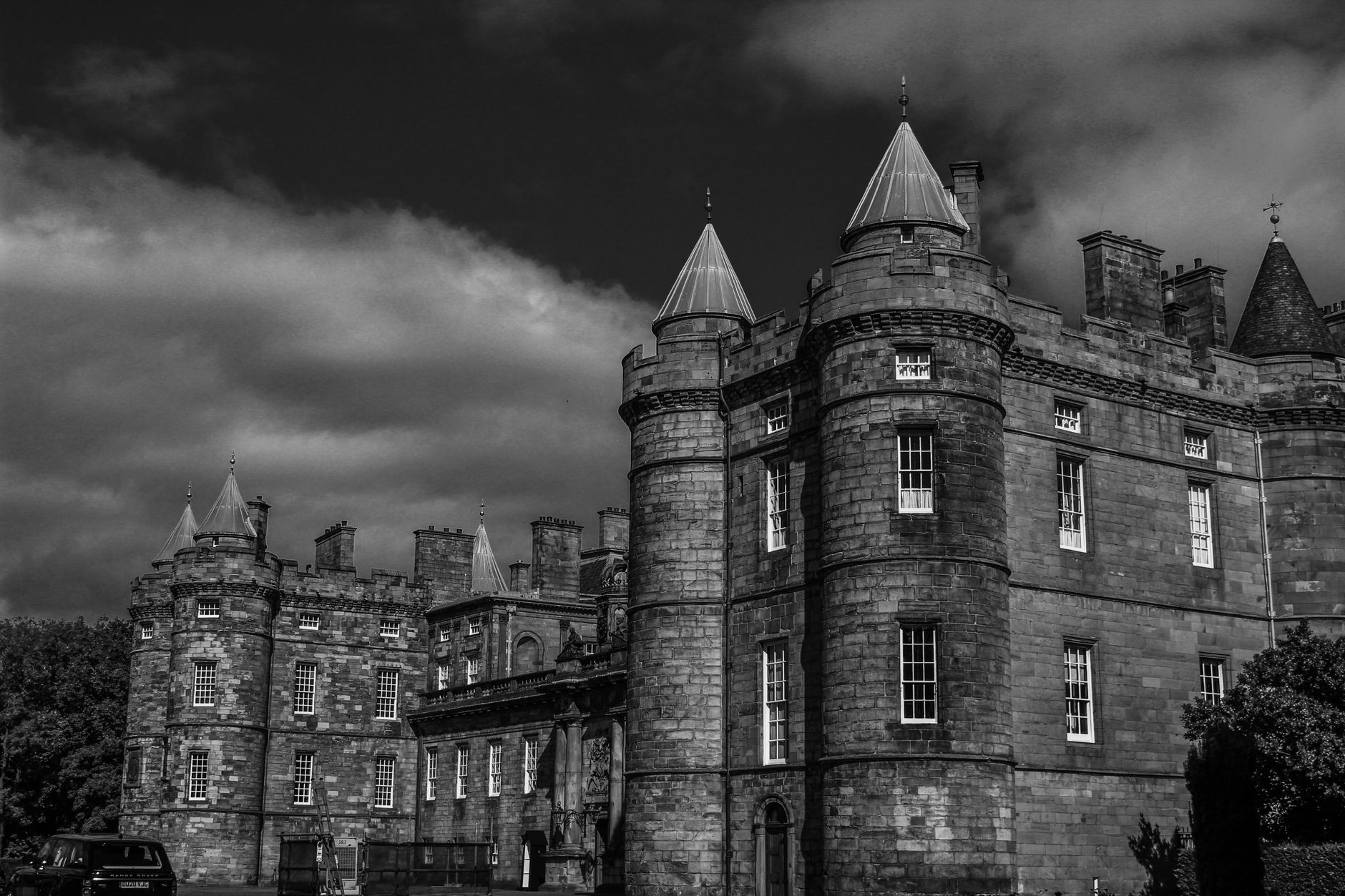
Standing at the foot of the Royal Mile, the Palace of Holyroodhouse represents nearly 900 years of Scottish royal history. This combination of abbey, palace, and working royal residence is far more than a historic building: it’s a physical record of how Edinburgh became a capital, how Scotland’s monarchy evolved, and how a single site absorbed the ambitions and crises of five centuries of kings and queens.
Unlike Edinburgh Castle’s fortress intimidation, Holyrood offered privacy and grace. Kings chose it as their preferred Edinburgh home because it was comfortable, accessible, and surrounded by royal hunting grounds. For visitors today, the palace provides an intimate connection to Scottish history, particularly through the dramatic and tragic story of Mary, Queen of Scots, whose chambers remain among the most visited rooms in Scotland.
Understanding Holyrood’s past helps make sense of its present role and architecture. The palace you see today is a palimpsest – layers of different monarchs’ visions, each leaving their mark. Some fragments date to the 1530s; the grand exterior most visitors encounter was built in the 1670s; the rooms Mary lived in have been preserved almost as she left them.
From Abbey to Royal Residence: The Medieval Foundations
The site’s royal significance began not with a palace but with a monastery. In 1128, King David I founded Holyrood Abbey as a house for Augustinian canons. According to local tradition, David was inspired to establish the abbey after a miraculous vision during a hunting incident, though the precise details vary across sources. What is documented is that the abbey quickly became important: it housed the canons’ community, served as a place of worship, and provided a guest house for royal visitors.
For nearly 400 years, the abbey’s guesthouse served as the primary royal lodging. Robert the Bruce held parliament at Holyrood in 1326, and the Treaty of Edinburgh–Northampton (1328), which secured Scottish independence after the First War of Scottish Independence, was negotiated here. Kings preferred Holyrood to Edinburgh Castle, which stood cold and exposed on the rock above the city.
Royal Ceremonies and Early Palace Development
By the 15th century, Holyrood was hosting significant royal events. James III married Margaret of Denmark at Holyrood in 1469. Royal women, including queens and consorts, lived here during their time in Edinburgh. The abbey remained the focal point, but by the late 1400s, dedicated royal lodgings had begun to develop adjacent to the abbey cloisters, marking the early transition from guest house to palace.
James IV and the First Palace: 1501–1505
The decisive transformation came when James IV decided to build a new palace alongside the abbey between 1501 and 1505. This was not a defensive fortress but a fashionable Renaissance residence designed for comfort and entertaining. The palace featured a chapel, gallery, royal apartments, and a great hall – the architecture of a confident, cultured monarchy.
James built this palace partly as a wedding gift to himself ahead of his 1503 marriage to Margaret Tudor, sister of Henry VIII. The marriage aligned Scotland with the English royal house and cemented Edinburgh as a capital deserving proper royal architecture. Only fragments of James IV’s original gatehouse survive in the palace today, but his decision to build here established Holyrood as the monarchy’s preferred Edinburgh residence – a position it has maintained for over 500 years.
The James V Tower and 16th-Century Expansion
James V, the son of James IV, expanded the palace dramatically between 1528 and 1536. He commissioned a massive tower with secure royal chambers – the structure that now dominates the palace’s north-west corner and remains the oldest part of the building you can visit today. This tower was built to be defensible, featuring a drawbridge and carefully planned layouts designed for both security and privacy.
James V’s tower contains apartments decorated with fine ceilings and fireplaces, many of which survive from his era. The tower represents a shift in architectural thinking: no longer purely a pleasure palace, it also needed to protect the monarch. This fortress-within-a-palace approach would prove significant when religious and political turmoil struck Scotland in the following decades.
Mary of Guise and Renaissance Refinement
After James V’s death, his widow Mary of Guise served as regent for their young daughter, Mary, Queen of Scots. Mary of Guise oversaw significant repairs and refinements to Holyrood, particularly within James V’s tower. She commissioned new ceiling work and installed decorative elements that reflected continental Renaissance taste. When Mary, Queen of Scots returned to Scotland in 1561, she inherited a palace that had been carefully maintained and updated for her use.
Mary, Queen of Scots: The Palace’s Most Famous Chapter
No account of Holyrood Palace is complete without Mary, Queen of Scots. She lived here from 1561 to 1567 – a period of only six years that transformed her from a young queen confident in her right to rule into a deposed refugee fleeing Scotland forever.
Mary made Holyrood her principal residence and filled it with the ceremonial and cultural life of a Renaissance court. She held court, entertained nobles, and attended state functions. Privately, she hunted deer in Holyrood Park and set up archery butts in her chambers for practice. Contemporary accounts describe an intelligent, charming young woman, skilled in languages, music, and the arts of rulership.
Murder in the Palace: The Rizzio Incident
But drama and tragedy shadowed Mary’s time at Holyrood. On the evening of 9 March 1566, a group of nobles entered her private chambers in James V’s tower, drawn through a small vice stair by her jealous husband, Lord Darnley. Their target was David Rizzio, Mary’s Italian private secretary and confidant, whom Darnley and his allies suspected of undue influence over the queen.
Rizzio was stabbed repeatedly and murdered while Mary watched, powerless. A bloodstain on the floor of the cabinet where it occurred has been preserved and is visible to visitors today. The incident shocked Scotland and Europe. Mary was pregnant at the time, and she always believed the attack was intended to cause a miscarriage and destroy her claim through her unborn child.
Mary recovered and gave birth to her son, the future James VI. But politically, Holyrood and her marriage were increasingly unstable. Within a year, Darnley died under mysterious circumstances. Mary married the Earl of Bothwell, a match that turned Scottish nobility against her. By 1568, she had been forced to abdicate and would spend the rest of her life as a prisoner in England, dying on the executioner’s block in 1587.
Rooms and Relics of Mary’s Time
The apartments Mary lived in remain the most emotionally charged rooms in Holyrood. They comprise a series of interconnected chambers within James V’s tower: her bedchamber, an oratory or private chapel, a presence chamber, and a cabinet or small private room. Original 16th-century ceilings decorated with painted panels and heraldic emblems survive. Visitors encounter period furniture, tapestries, and artefacts associated with Mary, including needlework she created.
The Victorian era transformed these rooms into a shrine to Mary. When the palace began regular public visiting in the 19th century, her apartments became the first rooms tourists asked to see – a pattern that continues today.
Decline and Abandonment: 17th-Century Turmoil
After Mary’s departure, Holyrood ceased to be a regular royal residence. The Scottish Reformation fractured religious certainty, the monarchy moved between Edinburgh and London as the Stuart kings inherited the English throne, and religious warfare scarred the country.
During Oliver Cromwell’s occupation of Scotland in the 1650s, English soldiers were billeted at the palace, and it suffered significant damage from neglect and use as a military barracks. By the time the monarchy was restored in 1660, Holyrood was partially ruined, its usefulness questionable, and its future uncertain.
The Charles II Reconstruction: Baroque Grandeur (1671–1678)
The palace’s salvation came from an unexpected source: Charles II, the king who had no plans to visit Scotland but wanted it to be suitably magnificent should he choose to do so. After the Restoration in 1660, Charles commissioned an ambitious reconstruction and enlargement of Holyrood, transforming it from a damaged Tudor and Stuart palace into a grand Baroque residence.
The architect Sir William Bruce, often regarded as the originator of Scottish classical architecture, directed the redesign. Working with the master mason Robert Mylne (who famously signed one of the internal arcades with his name), Bruce created a palace built around a formal quadrangle or courtyard. This layout, inspired by French palace design, completely reorganised the building’s interior and created a new monumental front façade.
The Baroque Façade and Courtyard Design
The palace’s modern appearance dates from this 1670s work. Bruce’s design features symmetrical wings flanking a central courtyard, with two towers at the corners – James V’s original 1530s tower on the north-west (preserved as part of the new scheme) and a matching new tower on the south-west (built to balance it). Between these towers rises a classical gateway featuring a massive stone crown and the royal arms of Scotland.
The courtyard, known as the Quadrangle, was a revolutionary feature – an entirely enclosed formal garden space with arcaded walks on the ground floor and window-lined ranges above, detailed with pilasters and classical proportions. This courtyard layout, inspired by European monasteries and French palaces, defined Holyrood’s character and separated the royal apartments from the public rooms facing outward.
Interior Transformation
Inside, Bruce created suites of State Apartments on the principal floor, decorated with fine plasterwork and paintings. A Throne Room (originally the King’s Guard Chamber), dining rooms, withdrawing rooms, and an extraordinary Great Gallery containing portraits of Scottish monarchs were fitted out for entertaining and ceremony. These rooms, much decorated and updated since the 17th century, remain the public face of the palace today.
Remarkably, the work was completed between 1671 and 1678, despite Charles II never visiting Scotland. The palace was built in anticipation of royal use that came only intermittently.
The Georgian and Victorian Era: Restoration and Revival
For much of the 18th century, Holyrood was underused. George IV became the first reigning British monarch to visit Holyrood since the 17th century in 1822, a visit that prompted initial restoration efforts. But it was Queen Victoria who truly revived the palace’s role and significance.
Victoria was captivated by Scottish history, particularly by Mary, Queen of Scots. She invested in restoring Holyrood’s interiors, decorated it lavishly, and used it as a royal residence during visits to Scotland. The Victorian restoration revealed original 16th-century painted ceilings that had been hidden for centuries and established the careful conservation approach that continues today.
The Victorian era also saw the opening of Mary’s apartments to the public – an innovation that transformed Holyrood from a working palace into a tourist attraction and historical monument. This dual role, as both functioning royal residence and public historic site, persists in the 21st century.
What Visitors See Today: The Palace and Its Architecture
The Palace of Holyroodhouse remains the official Scottish residence of the British monarch. This means it functions on two levels: as an active royal residence hosting state functions and ceremonies, and as a historic monument open to public visitation.
The Major Rooms and Galleries
The public tour typically includes roughly a dozen rooms spanning three centuries of royal taste:
- The Great Gallery – At 144 feet long (44 metres), this is the palace’s largest and most visually striking room. It displays 96 portraits of Scottish monarchs from the Stuart dynasty and earlier kings, a collection begun under Charles II. The room still hosts state receptions and royal events.
- The Throne Room – Originally the King’s Guard Chamber, this stately room contains two throne chairs commissioned for King George V and Queen Mary in 1911 and remains in use for formal ceremonies.
- The Dining Room and State Apartments – A series of formal reception rooms decorated with fine furniture, mirrors, tapestries, and period artwork, arranged in suites reflecting their 17th-century design but continuously updated by successive monarchs.
- James V’s Tower – The oldest surviving part of the palace (1528–1532), containing smaller, more intimate historic chambers and the famous apartments of Mary, Queen of Scots.
- Mary’s Chambers – A suite of three rooms in James V’s tower: bedchamber, oratory, and presence chamber. Decorated with 16th-century painted ceilings and furnished with period pieces, these rooms are deliberately preserved to evoke Mary’s era. A bloodstain marks the spot where David Rizzio was murdered.
The Holyrood Abbey Ruins
Just outside the palace stands Holyrood Abbey, now a dramatic ruin. The partly intact nave (the main body of the church) and some architectural fragments remain, including a beautiful Gothic west front and surviving doorways. A royal burial vault contains the mortal remains of various Scottish monarchs including David II, James II, and James V. The ruins are typically included with palace admission, though they may occasionally be closed for conservation work. When open, they add emotional weight to the visitor experience – the abbey grounds offer a quiet counterpoint to the decorated palace rooms.
The Gardens and Grounds
The palace sits within 10 acres of gardens set at the edge of Holyrood Park, a much larger landscape feature including Arthur’s Seat. The gardens themselves were largely created in the 17th century and redesigned by successive generations. When open to visitors, they provide pleasant walking and views toward Arthur’s Seat and Edinburgh’s skyline. Note that the palace gardens may occasionally be closed for conservation work.
Visiting Holyrood Palace: Practical Information
Location and Access
Holyrood Palace stands at the eastern foot of the Royal Mile in central Edinburgh, near the junction with Canongate. It’s directly opposite the Scottish Parliament building. The easiest approach is to walk downhill from Edinburgh Waverley railway station or the High Street (a 15-minute walk on flat or gently sloping ground).
Opening Hours and Seasons
The palace operates on a seasonal schedule. From April 2 to October 31, it opens Thursday to Monday 9:30am to 6:00pm (last admission 4:30pm), with daily opening from May 21 to September 7. From November 1 to March 31, opening is Thursday to Monday, 9:30am to 4:30pm (last admission 3:15pm). The palace closes completely during Holyrood Week (typically late June or early July) when the King resides there, and on Christmas Day and Boxing Day. Check the official Royal Collection Trust website before visiting, as occasional royal events can cause short-notice closures.
Visiting Experience
Allow 90 minutes to 2 hours for the palace visit. Audio guides and guided tours are available. The palace is managed by the Royal Collection Trust and operates as a timed-ticket venue to manage visitor numbers. Tickets can be purchased on-site or in advance. The palace is wheelchair accessible, and service animals are permitted.
What to Notice During a Visit
- The contrast between James V’s 1530s tower (fortress-like, narrow windows, defensive) and the 1670s Baroque ranges (classical, symmetrical, outward-facing)
- The detailed plasterwork and heraldic panels in the upper rooms, particularly the State Apartments, which reflect court culture at different periods
- The 16th-century painted ceilings in Mary’s chambers, which are among the finest examples of Renaissance decoration in Scotland
- The Great Gallery’s portrait collection, which tells the story of Scottish monarchy through art
- The abbey ruins, which help explain the medieval origins and religious significance of the site
- The gardens and views toward Arthur’s Seat, which remind visitors that Holyrood was chosen partly for its landscape setting
How Holyrood Connects to Edinburgh’s Story
Holyrood Palace is not isolated history. It sits at one end of the Royal Mile, with Edinburgh Castle at the other. This symbolic geography – fortress and palace at opposite ends of Scotland’s most famous street – reflects Edinburgh’s dual nature as both a defensive stronghold and a capital of governance and culture.
The palace’s location in the Canongate neighbourhood (named after the Augustinian canons of Holyrood Abbey) shows how religious institutions shaped medieval Edinburgh’s urban layout. The Scottish Parliament building, constructed in the 1990s–2000s immediately opposite the palace, now houses Scotland’s devolved government – a modern echo of medieval parliaments held at Holyrood Abbey.
Holyrood Park and Arthur’s Seat, which dominate the area, remain crown property, preserved as open space since medieval times. Visiting Holyrood means being surrounded by layers of Edinburgh history in physical form: Roman camps, medieval abbeys, Renaissance palaces, and modern government all visible within a few minutes’ walk.
Frequently Asked Questions About Holyrood Palace
Why was Holyrood Abbey founded in 1128?
King David I founded the Augustinian abbey, ostensibly following a miraculous experience during a hunting incident. While the precise legendary details vary, what is documented is that David wanted a major religious foundation in Edinburgh, and the abbey became an important spiritual and administrative centre. The abbey’s name, Holyrood (Holy Cross), reflects its dedication to the cross of Christ.
How old is the Palace of Holyroodhouse?
The site has been associated with royalty since the 1100s (as an abbey guesthouse), but the palace itself began in 1501 when James IV built his first structures. The majority of what visitors see dates from 1671–1678, when Sir William Bruce rebuilt it in Baroque style for Charles II. Key sections, particularly James V’s tower (1528–1536) and Mary’s chambers, survive from the 16th century and are among the oldest parts of the building.
Is Holyrood a working royal residence or just a museum?
Both. The palace is the official Scottish residence of the King and is used for state functions and ceremonies, particularly during Holyrood Week each summer. However, it is also open to the public as a historic monument and museum for much of the year. Visitors cannot enter during periods when the royal family is in residence or when state events are being held.
What is the most significant room in Holyrood Palace?
This depends on visitor interest. The Great Gallery is architecturally the most impressive (and the largest). Mary’s chambers in James V’s tower are the most historically resonant and emotionally significant because of her dramatic and tragic story. The State Apartments collectively represent the palace’s role in 17th-century court life. Most visitors spend the most time in all three areas.
Can you visit the abbey ruins as well as the palace?
Holyrood Abbey ruins are normally included with palace admission. Visitors can walk around the remaining medieval stonework, which includes parts of the nave, the Gothic west front, and the royal burial vault. The ruins provide important context for understanding the site’s medieval religious significance and the transition from abbey to palace. However, note that the abbey may occasionally be closed for essential conservation work.
What’s the best time to visit Holyrood Palace?
Early morning or late afternoon visits offer smaller crowds and better light, particularly in the smaller, darker rooms. Weekday visits are less crowded than weekends. Summer offers longer opening hours (until 6pm) and daily opening from May 21 to September 7 but brings larger tourist groups. Winter hours are shorter but the pace is more relaxed. Check in advance if royal events or closures are scheduled.
Holyrood’s Place in Scotland’s Story
Five hundred years after James IV built his palace beside Holyrood Abbey, the site remains at the centre of Scottish royal and national life. It witnessed Mary, Queen of Scots’ turbulent reign, hosted baroque revels under the Stuart and Hanoverian monarchs, survived Cromwellian occupation, was restored by Charles II’s architects, and was revived by Victorian enthusiasm for Scottish history.
Today, Holyrood Palace is unique among British royal residences: it functions simultaneously as a working home and seat of royal authority, a public historic monument, a museum of Renaissance and Baroque art and design, and a tangible record of how Scotland’s monarchy adapted, survived, and reinvented itself across five centuries of profound change. For visitors to Edinburgh, it offers both historical depth and architectural beauty – a place where the past remains genuinely present rather than merely preserved.